The Reality of Replanting After Stump Removal
Many Australian homeowners assume that once a stump is ground down into woodchips, the site is immediately ready for a new sapling. However, attempting to replant a tree in the same spot after stump grinding without proper soil remediation is a recipe for failure.
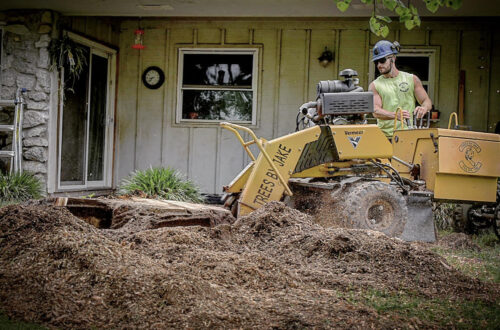
While the visible portion of the tree is gone, the underground ecosystem is in a state of flux. The process of stump grinding leaves behind a high concentration of sawdust and woody debris. If left unmanaged, this organic matter creates a biological “nitrogen vacuum” that can starve a young tree before its roots even take hold.
This guide provides a professional horticultural framework for preparing your soil, balancing nutrients, and ensuring your new tree thrives in its predecessor’s footprint.
See more: Professional Stump Grinding Services: Safe and Efficient Tree Stump Removal Across Australia
Why You Can’t Just “Dig and Drop”
To understand how to replant a tree in the same spot after stump grinding, you must first understand the chemical war happening beneath the surface.
The Nitrogen Depletion Problem
Wood is primarily carbon. When microorganisms begin to break down the massive amount of sawdust left behind by a grinder, they require nitrogen to fuel the decomposition process. These microbes are highly efficient; they will strip every available molecule of nitrogen from the surrounding soil.
If a new tree is planted in this environment, it won’t have the nitrogen it needs for chlorophyll production and leaf growth. This is known as “nitrogen drawdown.”
Soil Settling and Air Pockets
Stump grinding doesn’t just leave sawdust; it leaves a cavernous mix of loose fluff and air. As the remaining deep roots decay over the next 5 to 10 years, the ground will naturally sink. A tree planted in a fresh grind-site often “subsides,” leading to root rot or structural instability.
Step-by-Step: How to Replant a Tree in the Same Spot After Stump Grinding
If you are determined to use the exact same location for your new tree, follow this professional remediation protocol.
1. Radical Sawdust Removal
The most common mistake is mixing the “mulch” back into the hole.
- Action: Shovel out as much of the sawdust and wood fragments as possible.
- Pro Tip: You don’t have to throw it away; use it as top-dress mulch in other parts of the garden, but do not bury it in the planting hole.
2. Deep Root Management
While the grinder gets the “ball” of the stump, the lateral roots remain.
- Action: Use a mattock or a sharp spade to chop out as many of the larger remaining roots (greater than 50mm diameter) as possible. This clears a path for the new root system.
3. Soil Integration and Quality Fill
You are now left with a hole that is likely depleted of native structure.
- Action: Do not fill the hole with 100% potting mix. Mix 50% native garden soil with 50% high-quality organic compost.
- Why: This creates a transition zone that encourages the tree to grow roots outward rather than staying “pot-bound” in a pocket of rich soil.
4. Correcting the Nitrogen Balance
Since the remaining chips will still be decomposing, you must compensate for the nitrogen loss.
- Action: Add a slow-release, high-nitrogen fertiliser (such as blood and bone or a specific Australian native fertiliser if applicable) to the mix.
Critical Factors for Success in the Australian Climate
| Factor | Requirement | Reason |
| Time Delay | Wait 6–12 months | Allows initial decomposition and soil settling. |
| Watering | Deep soaking twice weekly | Decomposing wood can become hydrophobic (repels water). |
| Species Choice | Choose a different family | Prevents “replant disease” or shared pathogens. |
| Soil pH | Test before planting | Rotting wood can slightly acidify the immediate area. |
Best Practices for Long-Term Growth
Avoid “Replant Disease”
In many species, particularly fruit trees like apples or citrus, planting the same species in the same spot can lead to stunted growth. Pathogens specific to the old tree may still linger in the soil. To avoid this, try to rotate species—for example, replace an old Eucalypt with a Grevillea or a deciduous ornamental.
Ensuring Proper Drainage
The “bowl” created by stump grinding can act like a clay pot with no drainage holes. If your soil has high clay content, the loose fill in the center will collect water and drown the new roots.
- Test: Fill the hole with water. If it hasn’t drained in 2 hours, you need to incorporate gypsum or dig a wider “shattered” area around the hole to facilitate drainage.
Common Mistakes to Avoid
- Leaving the Sawdust: This is the #1 cause of new tree death. Sawdust is not soil.
- Planting Too Deep: The “root flare” (where the trunk widens at the base) must be visible at the soil line.
- Over-Fertilising: While nitrogen is needed, don’t dump raw chemical fertiliser directly on the roots; it will burn them. Always mix it into the soil.
- Ignoring the “Sink” Potential: If you don’t pack the soil firmly (but not compacted), your tree will lean within a year as the wood underneath rots away.
FAQ: Replanting After Stump Removal
How long should I wait after stump grinding to replant?
Ideally, wait 6 to 12 months. This gives the soil time to settle and the microbial activity to find a balance. If you must plant immediately, you must be extremely diligent about sawdust removal and nitrogen supplementation.
Can I use the woodchips from the stump as mulch?
Yes, but only on the surface. Never bury them. On the surface, they act as a great weed suppressant and will break down slowly without robbing the tree of nitrogen.
Will the old roots grow back?
Most trees will not regrow from leftover roots once the stump is ground. However, some species (like Willows, Poplars, or certain Elms) are notorious for “suckering” from remaining root fragments.
Do I need to add lime to the soil?
Not necessarily. While decomposing wood is slightly acidic, most Australian garden soils benefit more from organic compost than lime. Only add lime if a pH test shows the soil is below 5.5.
What is the best fertiliser for a newly replanted tree?
Look for a slow-release granular fertiliser with a higher first number (N) in the N-P-K ratio. In Australia, organic options like Seasol (for root establishment) followed by PowerFeed are highly effective.
Conclusion
Successfully replanting a tree in the same spot after stump grinding is entirely possible, provided you respect the biological processes at play. By removing the carbon-heavy sawdust, replenishing nitrogen, and allowing the soil time to settle, you create an environment where a new tree can flourish for decades.
The “Golden Rule” of replanting: The hole you dig should be twice as wide as the root ball, but no deeper. Focus on soil health first, and the tree will take care of the rest.
Internal Linking Opportunities:
- Best organic compost for Australian soils
- How to choose the right tree for your backyard
- Guide to professional stump grinding services
Authoritative External References:
- International Society of Arboriculture (ISA) – Tree Planting Standards
- CSIRO – Soil Nutrient Management Research